
Call or Text:
(704) 266-1706
Remodel Timeline Expectations: How Long Does a Home Remodel Take in Charlotte?
“How long will this take?” is one of the first and most practical questions homeowners ask when planning a renovation. In Charlotte, the answer cannot be reduced to a fixed number of weeks or months. Remodel timeline expectations are shaped by preparation, scope definition, structural and mechanical coordination, permitting and inspections, material lead times, and the quality of project management guiding the sequence.
Construction is only the visible portion of a remodeling timeline. What determines duration is the coordination that happens before and during that work. For homeowners making a substantial financial investment, timeline clarity influences financing, temporary living arrangements, decision pacing, and overall confidence in the process.
A reliable schedule is rarely the fastest one. It is the one built on a complete plan, disciplined decisions, and sequencing that protects long-term performance.
What Remodel Timeline Expectations Actually Include
A remodel timeline begins in pre-construction, where design intent becomes buildable documentation. Architectural development, engineering coordination, and scope definition occur alongside early budget alignment. Permitting follows, and in well-run projects, procurement overlaps with regulatory review so long-lead materials are already in motion by the time construction mobilizes.
Construction then proceeds through staged sequencing. Demolition and structural work set the framework. Mechanical rough-ins follow. Inspections confirm compliance before surfaces are closed. Cabinetry, stone, flooring, trim, and finish installation occur in a deliberate order so the work is protected and rework is minimized. Closeout is the final phase where performance is verified, outstanding items are resolved, and the project is delivered as a complete system rather than a collection of finished surfaces.
In a coordinated design-build process, these phases are managed as one integrated framework instead of a series of disconnected handoffs. That integration is what makes timeline expectations credible. When early coordination is rushed, construction can appear to “start sooner,” but projects often pause more frequently as unresolved decisions surface during rough-in, inspection windows, or fabrication-dependent milestones.
Why Local Conditions in Charlotte Shape Remodel Timelines
Charlotte’s residential landscape introduces variability that matters at the scheduling level. Established neighborhoods often contain homes with layered renovations, concealed moisture conditions, older electrical infrastructure, and framing that predates current standards. These homes can remodel exceptionally well, but discovery is more likely, and responsible corrective work can affect pacing.
Newer homes may reduce structural uncertainty, yet they can introduce architectural review requirements, neighborhood guidelines, or design objectives involving custom fabrication and specialty detailing. In addition, finish-intensive trades are often scheduled well in advance. Realistic timelines account for that reality rather than assuming immediate availability.
Permitting and inspection requirements in Mecklenburg County further influence duration. Projects involving structural modification, plumbing relocation, electrical upgrades, or additions typically require formal review and staged inspections. Even well-prepared plans move through a municipal process with defined checkpoints. Construction sequencing must respect those gates.
Defining Scope With Architectural Clarity
Timeline stability begins with scope that is specific enough to build. A kitchen remodel may involve surface updates while preserving layout, or it may involve relocating plumbing, widening structural openings, modifying ceiling framing, upgrading electrical capacity, and integrating custom fabrication. These represent fundamentally different scheduling frameworks.
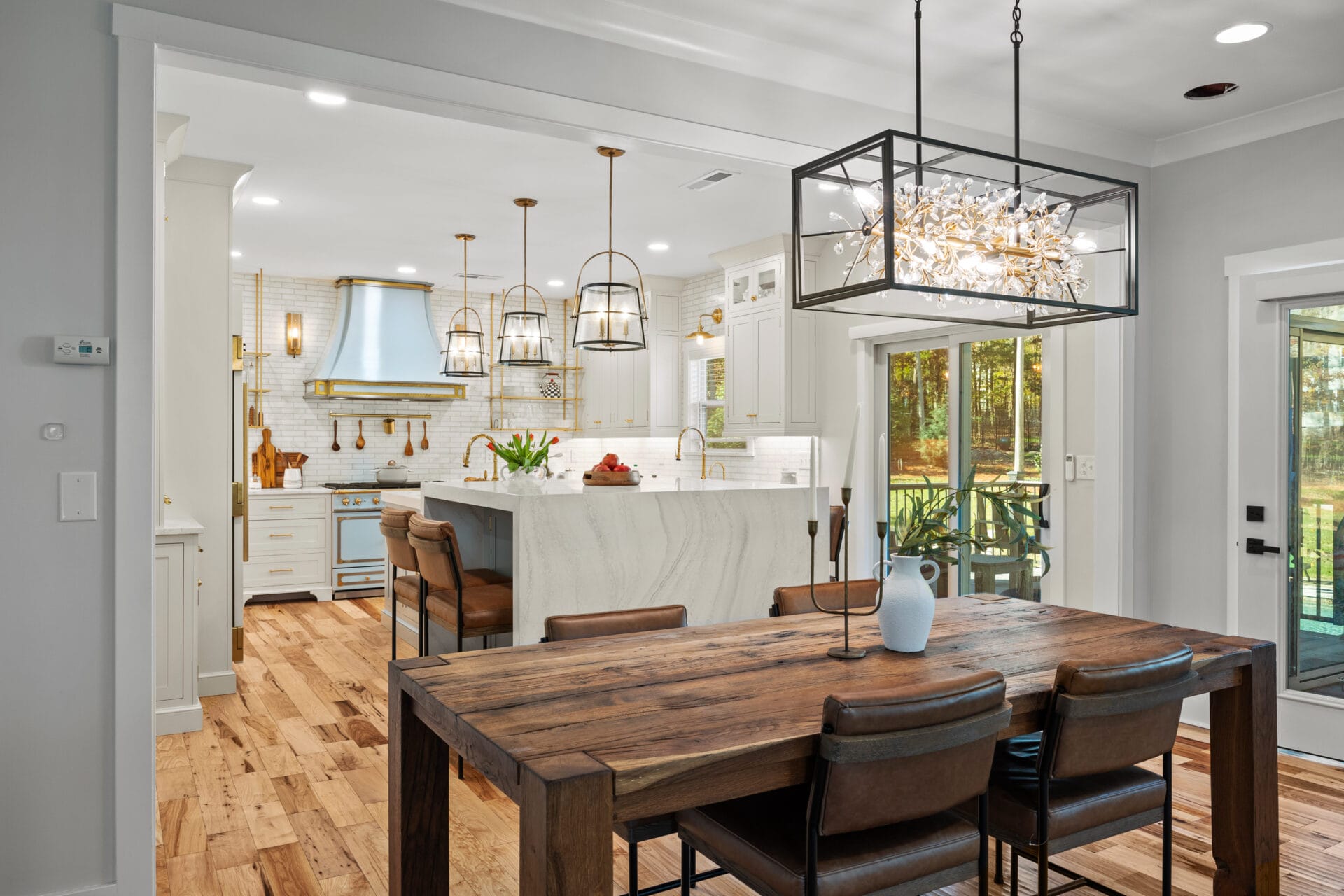
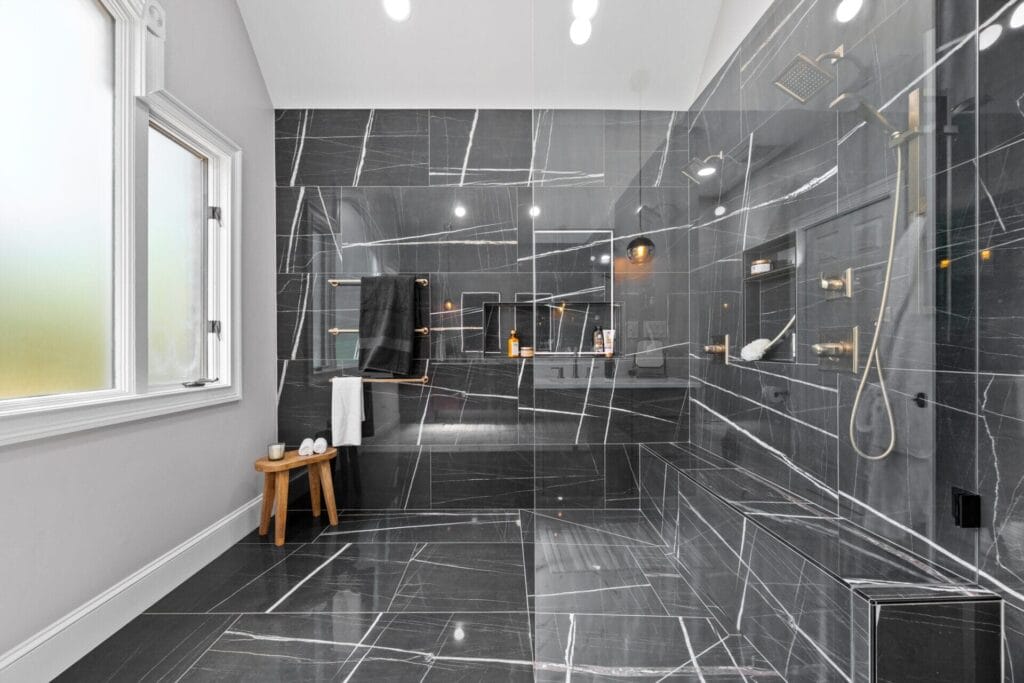
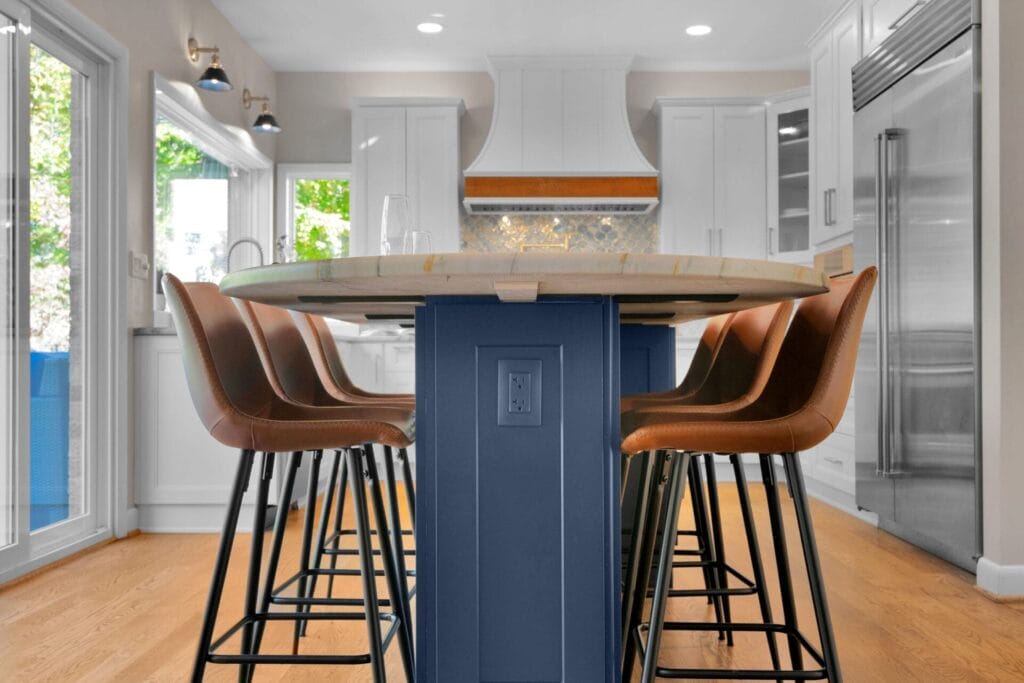
Comprehensive kitchen remodeling frequently requires coordination across cabinetry fabrication, stone templating, appliance delivery, flooring transitions, and layered lighting rough-in. Each element has dependencies that must be sequenced deliberately. Similarly, high-performance bathroom remodeling services often include waterproofing assemblies, ventilation upgrades, plumbing relocation, subfloor reinforcement, and inspection staging. Cure times and moisture management cannot be compressed without compromising performance.
When scope remains conceptual, scheduling becomes optimistic. When scope is documented with architectural clarity, duration becomes predictable.
Design Development as Systems Coordination
Professional remodels treat the home as an interconnected system rather than a collection of independent selections. Layout decisions influence structure. Structural revisions affect mechanical routing. Mechanical routing impacts lighting placement and finish detailing. Flooring selection influences cabinet height and trim transitions.
In kitchens, appliance specifications influence panel capacity and circuit distribution. Under-cabinet lighting requires coordination before drywall. Ventilation upgrades may affect duct routing and exterior penetrations. In bathrooms, waterproofing assemblies, substrate preparation, and ventilation strategies must align with plumbing placement and framing conditions. Improper sequencing can create moisture vulnerabilities that compromise long-term durability.
Coordination is not an aesthetic luxury. It is a timeline safeguard.
Engineering and Structural Resolution
Structural modification frequently extends duration because it introduces formal review and inspection dependencies. Removing load-bearing walls, enlarging openings, modifying roof systems, or adding square footage typically requires engineering documentation that aligns with building code and, in many cases, undergoes review prior to permit approval.
In established Charlotte homes, structural resolution may include reinforcing floor systems for stone installation, correcting deflection issues, adding blocking for cabinetry anchoring, or verifying load transfer to existing foundations. These interventions require time, but they prevent cracking, movement, and long-term structural distress.
Remodel timeline expectations should account for structural integration as part of performance assurance rather than viewing it as delay.
Budget Alignment and Decision Discipline
Budget clarity and timeline stability operate together. When selections remain unresolved, procurement cannot proceed and pricing remains provisional. That uncertainty shifts decisions into the construction phase, where changes disrupt sequencing and extend duration.
A disciplined pre-construction approach establishes a defined scope and identifies items that dictate lead times. Custom cabinetry, specialty windows, architectural doors, stone fabrication, and unique lighting fixtures should be selected early enough to run in parallel with permitting. Decision discipline does not eliminate flexibility; it prioritizes decisions that affect infrastructure and sequencing so downstream work proceeds without interruption.
Permitting and Inspection Sequencing in Mecklenburg County
Permitting is a regulatory framework that protects structural integrity and life-safety systems. A realistic schedule accounts for permit review cycles, potential revisions, and staged inspections. Structural framing must pass inspection before concealment. Rough plumbing and electrical must be approved prior to drywall installation. Final inspections confirm compliance before closeout.
Inspection availability can vary based on municipal workload. A credible schedule anticipates inspection timing rather than assuming immediate availability. Missed inspection windows often result in trade remobilization, which can extend duration even when workmanship is strong.
Remodel timeline expectations must integrate these checkpoints as structural components of the schedule.
Procurement, Fabrication, and Delivery Coordination
Material procurement frequently drives duration more than labor pacing. Cabinetry may require extended production windows. Windows and doors are often manufactured to specification. Stone countertops require templating after cabinetry installation and fabrication time thereafter. Specialty fixtures and lighting may depend on vendor production cycles.
Treating procurement as a deliberate schedule layer prevents reactive delays. Long-lead items should be ordered early enough that delivery aligns with installation readiness. Logistics further shape duration. Limited staging space, narrow access routes, or neighborhood constraints may require phased delivery and protected storage. These factors influence pacing but are manageable when acknowledged early.
Construction Sequencing and the Critical Path
Construction is governed by dependency, not activity volume. Demolition precedes framing. Framing precedes mechanical rough-in. Rough-in precedes inspection. Inspection precedes drywall. Cabinetry precedes countertop templating. Flooring and paint must be sequenced to protect final finishes.

The critical path represents the chain of dependent activities determining completion. Protecting the critical path requires proactive procurement, coordinated inspections, and consistent communication. A schedule that ignores dependencies may appear shorter on paper but typically generates rework and cumulative delay. Realistic remodel timeline expectations reflect structured sequencing rather than optimistic overlap.
Occupied Versus Vacant Remodels
Occupancy strategy meaningfully affects pacing. Occupied projects require dust containment, phased utility adjustments, restricted work zones, and daily protection of adjacent living spaces. These accommodations may extend duration but preserve livability. Vacant projects allow broader access and potentially overlapping trade activity, but inspections, fabrication, and structural integration still govern pacing.
Timeline expectations should reflect the chosen occupancy approach and its logistical implications, including which spaces must remain functional and when.
Decision Deadlines That Protect the Schedule
High-investment remodels tend to run more predictably when decisions are timed to construction realities. The most schedule-sensitive decisions are the ones that affect rough-in locations and lead times. Cabinet layouts, appliance specifications, plumbing fixtures, lighting locations, and ventilation strategy must be confirmed early enough that mechanical rough-ins can be completed once, inspected, and closed without revision.
Finish selections have timing implications as well, particularly where substrates and transitions matter. Tile formats can affect substrate preparation. Flooring thickness can influence trim detailing and thresholds. Specialty hardware can impact fabrication and installation sequencing. These are not reasons to limit design ambition. They are reasons to align decisions with the sequence so the build remains steady and the final detailing reads as intentional.
What a Professional Project Schedule Should Show
A well-managed schedule is more than a projected completion date. It is a working document that ties decisions, procurement, and field sequencing together so the project can move without constant rescheduling. For homeowners, the most useful schedules explain the structure of the work and the logic behind it, not only the dates.
A credible schedule identifies the major milestones that must occur in order—structural work, rough-ins, inspection gates, enclosure, cabinetry, templating, and finish installation—while clarifying which items are on the critical path. It also makes decision deadlines visible. If plumbing fixtures, lighting locations, or cabinet layouts are not confirmed by a certain point, the schedule should show the downstream impact rather than implying the project can absorb delay without consequence.
Equally important is how the schedule is maintained. A schedule that is never updated is not a schedule; it is a snapshot. In well-run projects, schedule updates reflect real site conditions, procurement status, and inspection timing. During the early remodel planning process, this level of transparency often allows homeowners to make timely choices with confidence, because the team is clear about what is driving the next milestone.
Change Orders and Discovery Management
Discovery is inherent in renovation, especially within older housing stock. Common findings include outdated wiring, compromised subflooring, concealed moisture damage, and prior non-compliant modifications. Addressing these responsibly may require schedule adjustment, but it protects long-term performance.
Homeowner-initiated revisions also affect sequencing. Revised cabinetry layouts alter rough-in positioning. Fixture substitutions affect lead times. Material changes can influence installation pacing. The distinction between a stable project and a chaotic one lies not in whether change occurs, but in how it is documented, evaluated, and integrated without losing overall direction.
How Long Does a Home Remodel Take in Charlotte?

For most homeowners, the most useful answer is framed in terms of complexity rather than a universal duration. Projects that preserve layout and major systems often move more predictably because fewer dependencies change at once. Projects that reconfigure structure, relocate mechanical systems, and rely on custom fabrication are typically measured in months rather than weeks, because the work involves formal review, staged inspections, and fabrication sequencing.
A credible team should be able to explain what is driving the schedule for your specific project: which decisions must be made before permitting, which items must be ordered early, which inspections will gate progress, and where discovery risk is most likely. When the schedule is anchored to the project’s true constraints, expectations become easier to manage.
Why Compressed Timelines Introduce Risk
Shortened timelines often rely on deferred decisions, incomplete drawings, or aggressive overlap of dependent trades. When selections remain unresolved during rough-in, revisions become likely. When inspections are scheduled optimistically, missed windows cause remobilization. When trades overlap prematurely, finish damage or rework may occur.
A stable timeline does not eliminate efficiency. It eliminates avoidable risk. High-investment remodels benefit from sequencing that protects structural integrity, finish quality, and long-term performance.
Setting Remodel Timeline Expectations With Confidence
Remodel timeline expectations in Charlotte are best understood as the product of a coordinated system. Scope clarity, design coordination, engineering resolution, permitting, procurement, trade sequencing, inspections, and disciplined change management all influence duration.
A stable schedule is not defined by speed. It is defined by continuity, transparency, and long-term performance. When homeowners and project teams share a clear understanding of phases and dependencies, time becomes a tool for quality rather than a source of tension.